Diesel Diagnostics
Check engine light on? Truck cranks but won't start? Losing power on grades? Guessing at parts gets expensive fast. Our technicians use dealer-level scan tools and proven test procedures to pinpoint the actual problem on diesel pickups and semi-trucks — so you only pay to fix what's broken.
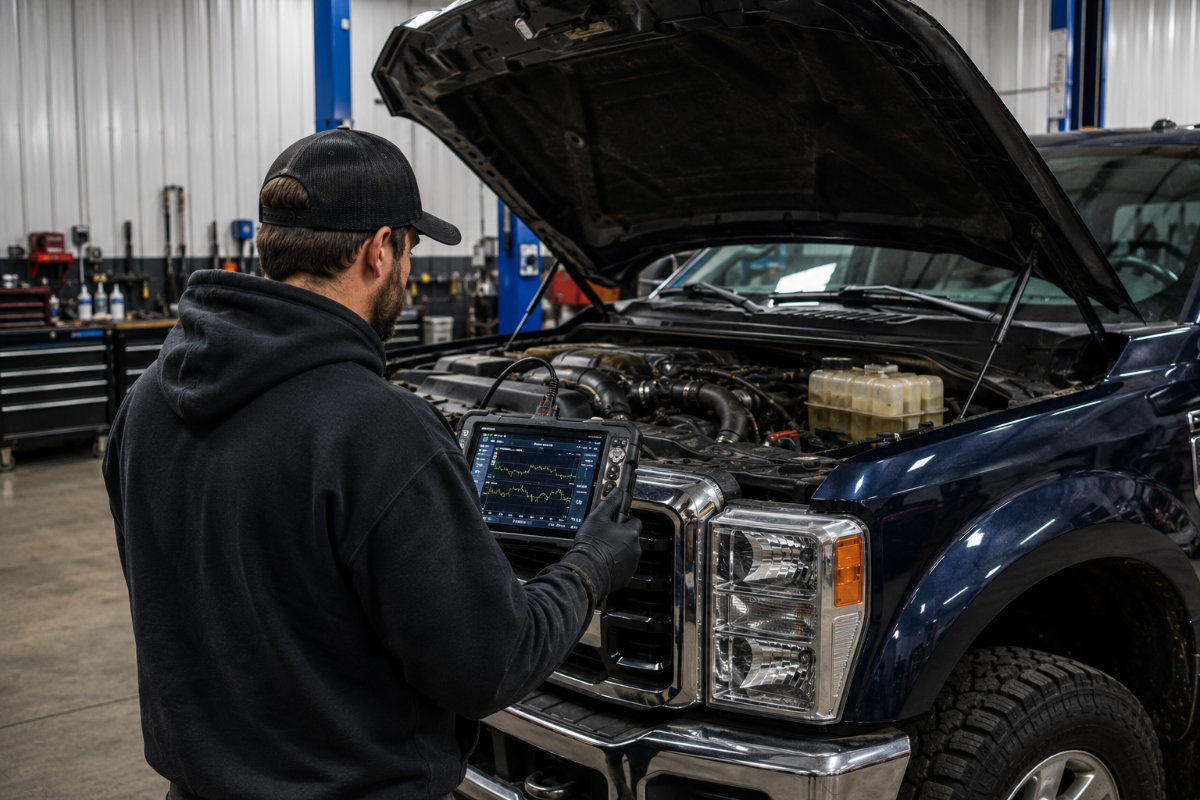
Complete Diesel Diagnostic Services
From a nagging check engine light to a truck that won't start, we diagnose engine, electrical, and drivability problems on every diesel platform.
Check Engine Light Diagnosis
A code tells you where to start looking — not what to replace. We read the codes, review freeze-frame data, and test the affected circuit before recommending any repair.
- Full Code Scan & Freeze-Frame Review
- Pinpoint Testing of Flagged Systems
- Clear Repair Estimate Before Work
ECM & Computer Diagnostics
Modern diesels are run by computers. We use OEM-capable software to monitor live data, run injector and cylinder tests, and verify module communication.
- Live Data & Bi-Directional Testing
- Injector Balance & Contribution Tests
- Module & Wiring Communication Faults
No-Start & Hard-Start Diagnosis
Cranks but won't fire, long cranking when cold, or dies going down the road — we test fuel supply, compression, glow plugs, and electronics to find the cause.
- Fuel Pressure & Supply Testing
- Glow Plug & Intake Heater Testing
- Compression & Cranking Speed Checks
Electrical & Charging Diagnostics
Dual-battery systems, high-amp alternators, and long wiring harnesses make diesel electrical problems tricky. We trace shorts, drains, and bad grounds properly.
- Battery, Alternator & Starter Testing
- Parasitic Draw & Short Tracing
- Wiring Harness & Ground Repairs
Drivability & Power Loss
Down on power, smoking, surging, or burning more fuel than it should? We diagnose turbo, fuel, air, and exhaust restrictions to restore performance.
- Turbo & Boost System Testing
- Smoke, Surge & Misfire Diagnosis
- Fuel Economy Investigations
Pre-Purchase Inspections
Buying a used diesel truck? We check compression, blow-by, fuel system health, and stored history codes so you know what you're getting before money changes hands.
- Full Mechanical & Scan Inspection
- Stored & Pending Code History
- Written Condition Report
Diesels We Diagnose
Our diagnostic equipment covers light-duty pickups through Class 8 trucks, plus diesel vans and motorhomes.
Ford Power Stroke
6.0L, 6.4L, 6.7L, 7.3L
GM Duramax
LB7 through L5P
RAM Cummins
5.9L & 6.7L
Semi-Trucks
All Major Brands
Class 7-8
Heavy Commercial
Medium Duty
Box Trucks, Flatbeds
RVs & Motorhomes
Diesel Pushers
Diesel Vans
Sprinter, Transit, ProMaster
Signs Your Diesel Needs Diagnostics
Small symptoms usually point to problems that get more expensive the longer they run. If you're seeing any of these, it's worth getting real answers before parts start failing.
Check Engine or Warning Lights
Any dash light — check engine, water-in-fuel, wait-to-start staying on — means the computer has flagged a fault worth investigating.
Excessive Smoke
Black, white, or blue smoke each point to different problems — overfueling, coolant intrusion, or oil consumption.
Power Loss or Poor Fuel Economy
Struggling on grades or burning noticeably more fuel often means turbo, fuel system, or air restriction issues.
Hard Starts, Rough Idle, or New Noises
Long cranking, shaking at idle, or knocks and rattles that weren't there before deserve attention before they become failures.
Stop Throwing Parts at It
Replacing parts on a guess is the most expensive way to fix a diesel. One accurate diagnosis usually costs less than the first wrong part — and it gets your truck back to work sooner.
Call for a DiagnosisOur Diagnostic Process
A structured process is what separates an accurate diagnosis from a guess. Here's how we get to the root cause.
Interview & History
We start with you — when the symptom happens, what's been replaced, and the truck's service history.
Scan & Verify
Full computer scan, live data review, and a road test to reproduce and confirm the symptom.
Pinpoint Testing
Targeted pressure, electrical, and component tests to isolate the actual failed part — not just the code.
Report & Estimate
You get a plain-language explanation of what we found and a written estimate before any repair begins.
Frequently Asked Questions
Common questions about diesel diagnostics.
Why is my diesel's check engine light on?
A check engine light means the engine computer detected a reading outside its expected range — anything from a loose sensor connector to a failing injector or emissions fault. The code identifies the system, but proper testing identifies the failed part. Driving with the light on for extended periods can turn a minor fault into an expensive one, especially if the truck goes into reduced-power mode.
My diesel cranks but won't start. What's the most common cause?
On most modern diesels, the top causes are fuel supply problems (weak lift pump, air in the fuel, clogged filter), failed glow plugs or intake heaters in cold weather, and low fuel rail pressure from injector or pump wear. In North Idaho winters, gelled fuel is also common. We test each system in order rather than guessing, which usually finds the cause in a single visit.
Can't I just read the code myself with a cheap scanner?
A basic code reader shows generic fault codes, and that's a fine starting point. What it can't do is show manufacturer-specific codes, run injector balance tests, command components on and off, or graph live sensor data — the things that tell you which part actually failed. Codes point to a system; testing finds the fault. That difference is what keeps you from replacing parts that weren't broken.
How much does diesel diagnostics cost?
Diagnostic time depends on the complexity of the problem — a straightforward code diagnosis takes far less time than an intermittent electrical fault. We'll give you an upfront diagnostic estimate before we start, keep you informed if the problem needs deeper testing, and apply what we learn directly to an accurate repair quote.
Do you diagnose semi-trucks and commercial vehicles?
Yes. Our diagnostic coverage includes Class 7-8 trucks (Cummins, Detroit, PACCAR, and more), medium-duty commercial trucks, diesel vans, and diesel motorhomes. If it has a diesel engine on the road, we can hook up to it and test it.
Is a pre-purchase inspection worth it on a used diesel truck?
Almost always. Used diesel trucks carry high price tags, and problems like worn injectors, head gasket issues, or a tired turbo aren't visible on a test drive. Our inspection includes a full scan for stored and pending codes, blow-by and compression checks, and a fluid and leak inspection — a small cost compared to discovering a $10,000 problem after you buy.
Get Answers, Not Guesses
Whether it's a warning light, a no-start, or a truck that just doesn't feel right, we'll find the real problem. Serving Bonners Ferry and all of North Idaho.
Visit Our Shop
Located in Bonners Ferry, Idaho. Stop by our shop or give us a call to discuss your automotive, truck, and diesel engine needs.
Contact Information
Phone
208-610-7537Address
51 David Thompson Dr.
Bonners Ferry, ID 83805
Hours
Mon-Fri: 7AM - 5PM